Guide · Kenyan grades
Kenya AA coffee: the complete guide.
Kenya AA is the flagship grade of Kenyan coffee — screen 17/18, very dense, grown between 1,400 and 2,100 metres on Kenya's volcanic highlands. This guide explains what makes Kenya AA coffee beans distinct, how the grade is assigned, what the cup tastes like, and how to buy the real thing straight from a licensed Kenyan exporter.
What is Kenya AA coffee?
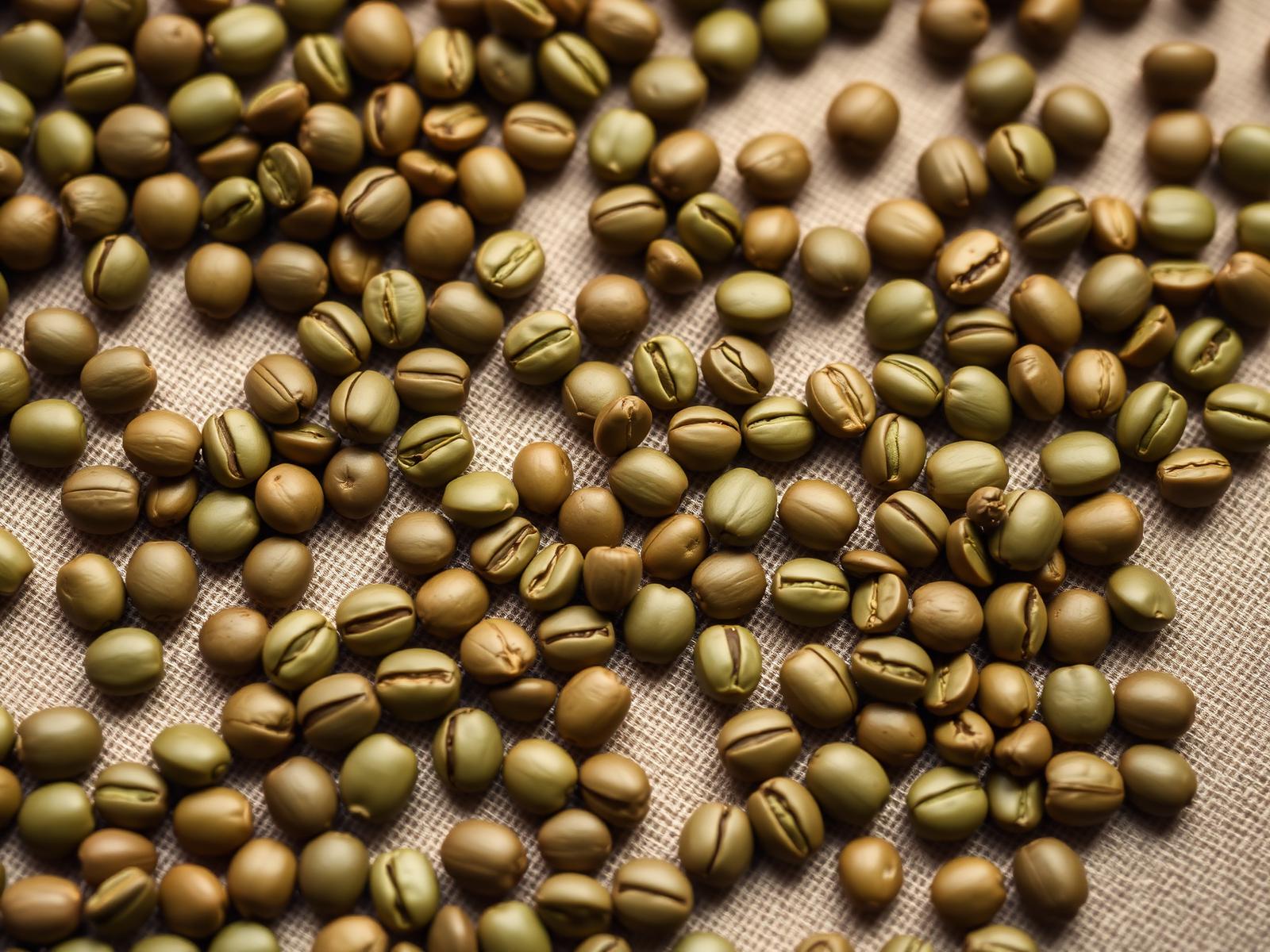
"AA" is the top of Kenya's official grading system for green coffee. It is not a brand, a region, or a roast level — it is a size and density classification applied to washed Arabica beans after milling. To be graded AA, a bean must be retained on a screen 17 or 18 (roughly 7.20 mm and above) and pass a density sort that removes lighter, hollower seeds. Everything smaller drops into AB, then C. Peaberry beans — single, round seeds formed when only one bean develops inside the cherry — are graded separately as PB.
The grade is why the phrase "Kenya AA coffee beans" is shorthand for premium: bigger, denser beans grown at altitude tend to carry more sugar and more complex acidity, and Kenya's washed process preserves that clarity in the cup.
Kenya AA at a glance
Grade
AA
Screen size
17 / 18 (≥ 7.20 mm)
Density
Very dense
Altitude
1,400 – 2,100 m
Process
Fully-washed (Kenyan)
Moisture
10.5 – 11.5 %
Water activity
≤ 0.60 aw
Typical SCA score
84 – 88+
The cup: bright, complex, structured
Well-processed Kenya AA is one of the most distinctive cups in specialty coffee. Expect a piercing but clean acidity — blackcurrant is the signature descriptor — sitting on top of a syrupy, wine-like body. Tomato leaf and grapefruit peel appear when the coffee is brewed light, molasses and blood orange when it is roasted a touch darker. Because AA beans are dense, they take heat evenly and hold structure through a longer roast, which is why AA is the go-to grade for both origin-forward pour-over and Kenyan-style espresso.
Where Kenya AA is grown
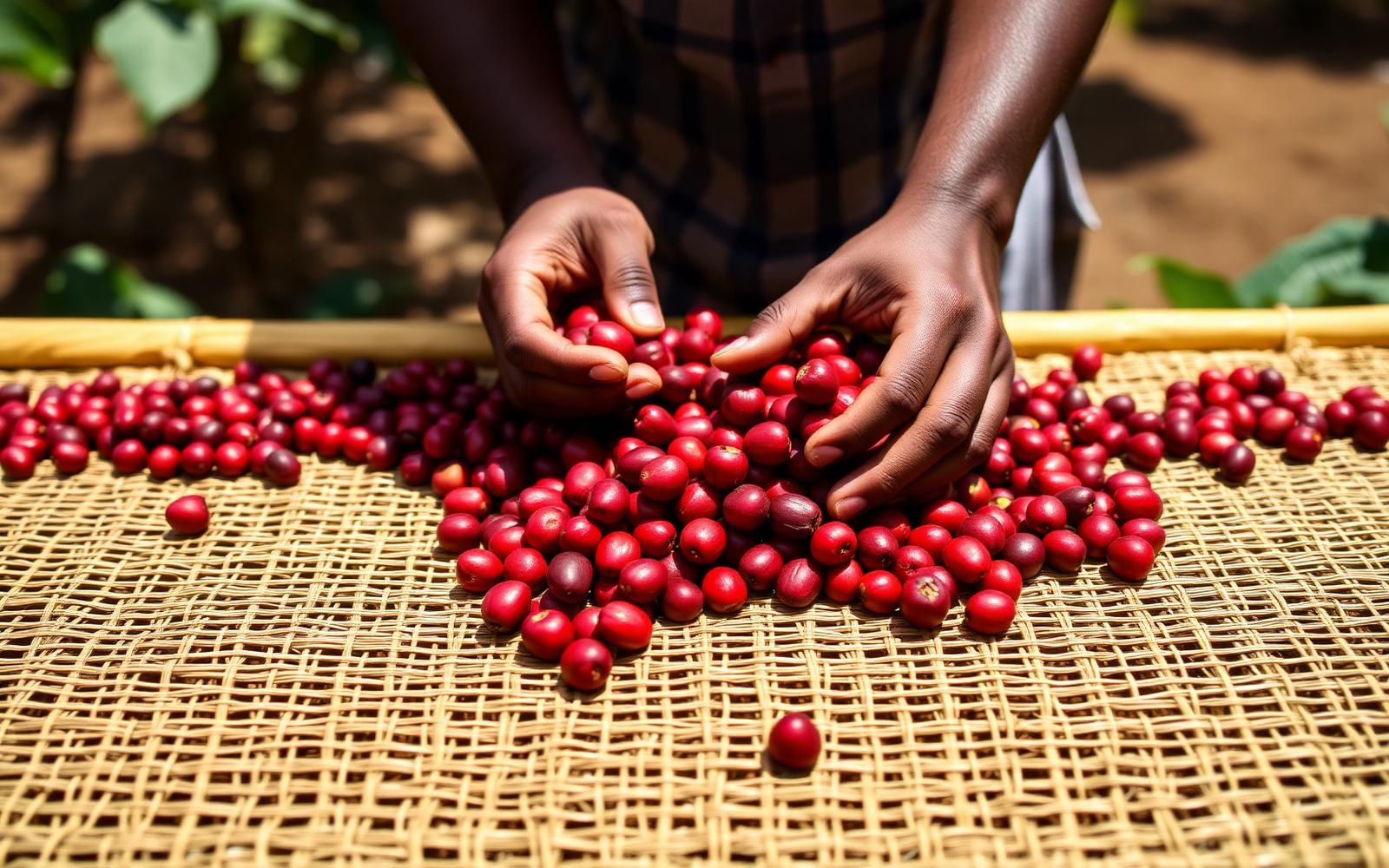
Kenya's AA-producing belt runs around Mount Kenya and the Aberdare Range — Nyeri, Kirinyaga, Muranga, Embu and Meru — with additional volume from Kiambu, Machakos and the Rift Valley slopes. Volcanic loam, cool nights and reliable rainfall let cherries ripen slowly at 1,400 – 2,100 metres, concentrating sugars and organic acids. Most farms are smallholders delivering cherry to a cooperative-run washing station, where it is fermented and dried on raised beds before being trucked to Nairobi for dry milling, grading and cupping.
Kenya AA vs AB vs Peaberry
AA is a size grade, not a quality guarantee — a poorly-processed AA will cup worse than a well-processed AB. That said, on a level-processed lot from the same washing station you can expect these differences:
| Grade | Screen | Density | Cup | Best for |
|---|---|---|---|---|
| AA | 17 / 18 | Very dense | Bright, complex, structured | Flagship single-origin filter and espresso |
| AB | 15 / 16 | Dense | Balanced, sweet citrus, softer acidity | Specialty blends, versatile espresso |
| PB | Peaberry | Very dense | Syrupy, concentrated, tropical | Single-origin espresso, small-batch filter |
How to brew Kenya AA
Kenya AA rewards a slightly cooler brew than most origins — the acidity is already intense, so easing extraction back a notch keeps grapefruit and blackcurrant on the right side of piercing. As a starting point:
- V60 — 1:16, 94 °C, medium-fine, 3:00 – 3:30 total.
- AeroPress — 1:14, 88 °C, medium, 90 s inverted then a gentle press.
- Espresso — 18 g in / 36 g out in 28 – 32 s at 93 °C.
For the full brew guide across every method, see our brewing Kenyan coffee guide.
Buying real Kenya AA
"AA" is easy to print on a bag, harder to verify. When you buy Kenya AA coffee, ask for:
- Farm or cooperative name, region and altitude in metres.
- Screen size — genuine AA is retained on screens 17/18.
- Harvest year and moisture / water-activity readings.
- An SCA cup score above 84, with published tasting notes.
- Certificates of origin and phytosanitary paperwork for export.
Cofystead is a licensed Kenyan coffee exporter based in Nairobi. Every AA lot we list is cup-scored and traceable to the washing station — green for roasters, small-batch roasted for drinkers, sample bag to full container.
From the shop