
Brewing guide
Pour it the way it wants to be poured.
Kenyan coffee is famous for its brightness — dense berries, fruit-forward acidity, a long clean finish. Here's how to get the most out of it, whether you brew by hand or pull shots at home.
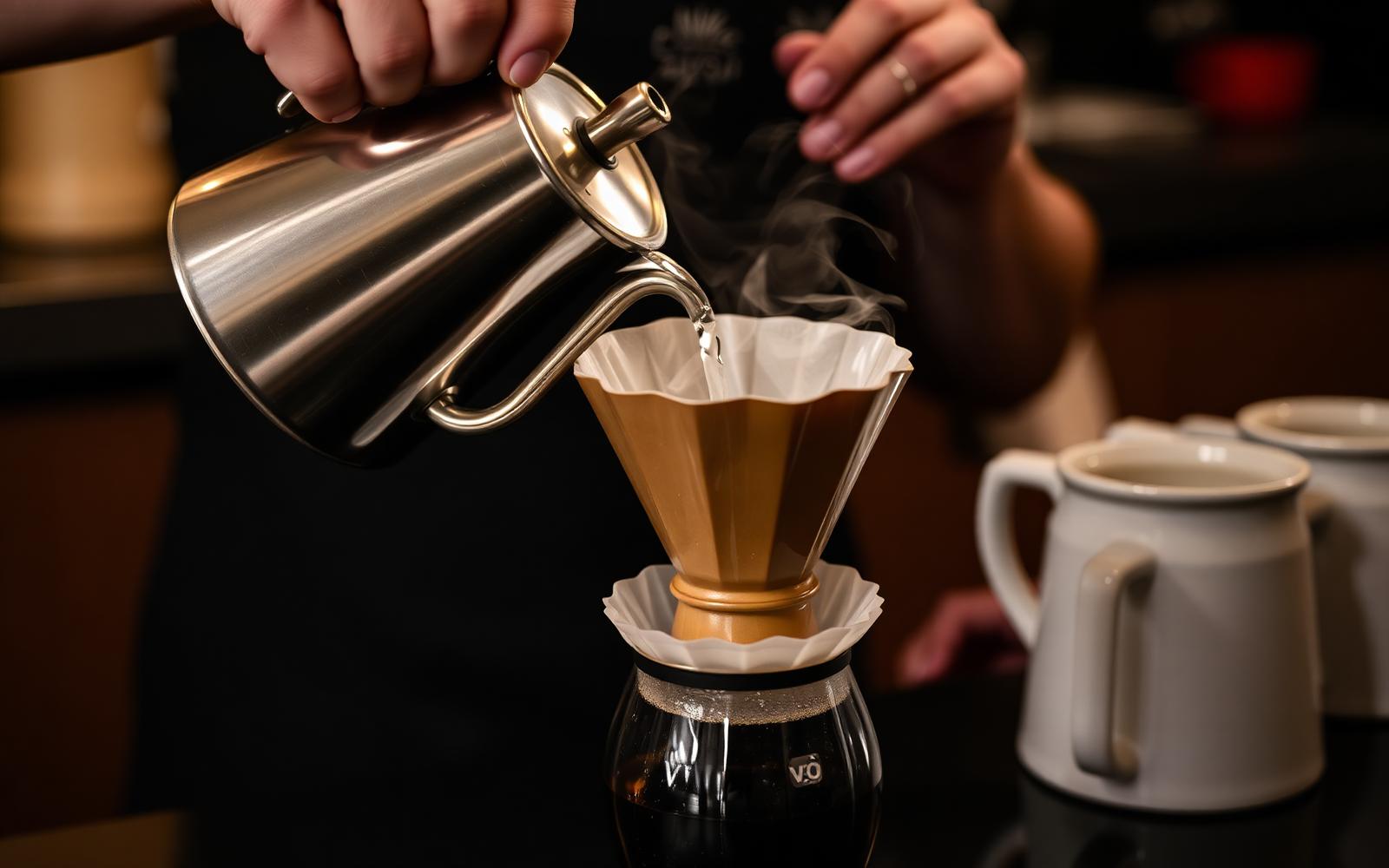
V60
1:16- Grind
- Medium-fine
- Water
- 94 °C
- Time
- 3:00–3:30
The default for Kenyan brightness. Start with 15 g in / 240 g out. Bloom 45 s with 45 g water, then pour in three pulses.
AeroPress
1:14- Grind
- Medium
- Water
- 88 °C
- Time
- 1:30
Great for AB and Peaberry. Invert, steep 60 s, gentle 30 s press. Concentrated fruit, softer acidity.
French press
1:15- Grind
- Coarse
- Water
- 94 °C
- Time
- 4:00
Full body, syrupy mouthfeel. Break crust at 4:00, skim, decant immediately to stop extraction.
Espresso
1:2- Grind
- Fine
- Water
- 93 °C
- Time
- 27–32 s
Kenyan espresso rewards a touch more development. 18 g in, 36 g out, aim for a citrus-forward, syrupy shot.
Common cupping notes
The flavour vocabulary of Kenyan coffee.
Care & storage
Three habits that protect the flavour.
Rest for 5–14 days
Kenyan coffee peaks about a week after roast. Fresh is a starting point, not the destination.
Store in the bag
One-way-valve bag, cool cupboard, away from light. Don't refrigerate; the temperature swings ruin the flavour.
Grind on demand
Every hour after grinding costs aromatics. If you can only change one thing, buy a grinder before the next coffee.